Barometric Leg In Vacuum System

Barometric Leg Technical Data Dekker Vacuum Technologies

Pdf Simple Modifications For Better Results From Rotary Vacuum Washers
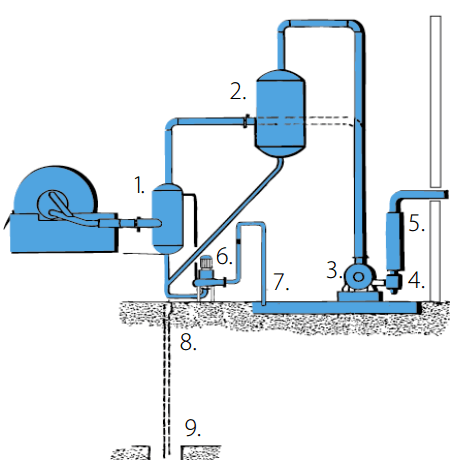
Filtrate Pump Vacuum Filter Pumps

Pdf Simple Modifications For Better Results From Rotary Vacuum Washers
Pdfcoffee Com
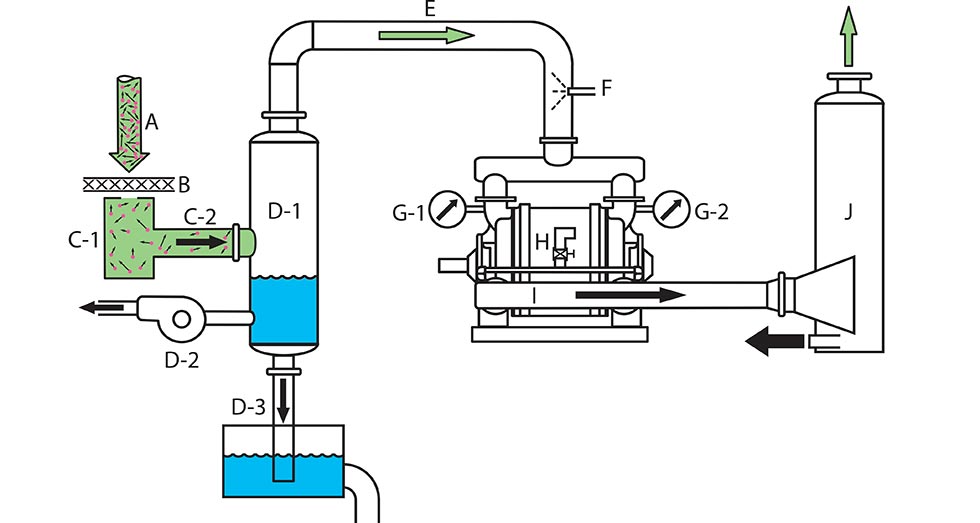
Reducing Gas Pressure With Vacuum Pumps Pumps Systems
There are many mills using these since long still improper designs have led to poor functioning and hence operational problems.
Barometric leg in vacuum system. 200 mm Hg abs the slurry has 5 to 10 hard crystalline solids in water. When you ask how to calculate barometric leg I assume you are asking how do you calculate the height of the barometric leg. Seal Drum Fills.
A barometric leg is basically a condensate drain. Contaminants that cannot be tolerated in the vacuum pump seal water under todays regulatory climate. As stated a barometric leg is terminology applied to the drain connection and piping connected to the condenser drain as a tail leg.
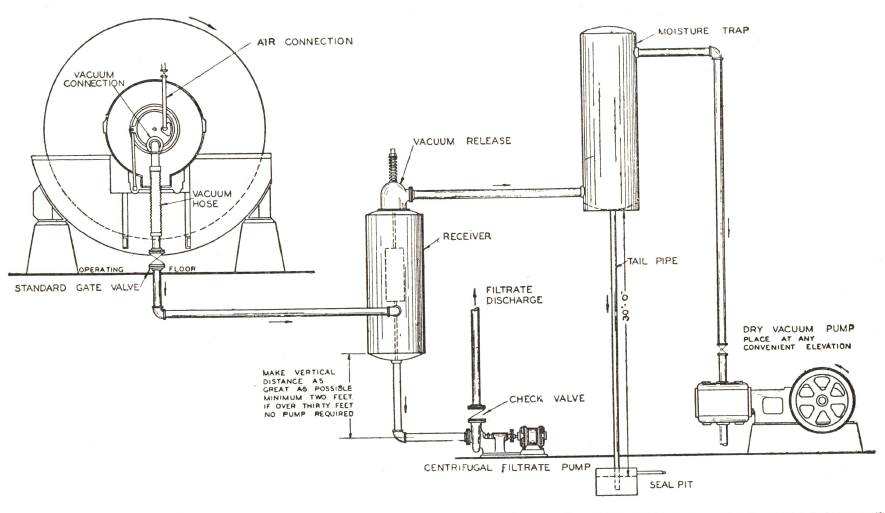
Dont forget that the effective length of your barometric leg is from the condenser to the height where the downstream leg of the loop seal enters the vessel - this can reduce your barometric leg length significantly and it must be checked against the vacuum you want to maintain. Often to drain liquids from a vacuum a tall 32 feet barometric leg is used. Condensate BackUp Due to Air Leak in Barometric Drain Line.
If there is insufficient hotwell area present the seal will be broken and air drawn into the tailpipe affecting the performance of vac-uum-producing equipment and the process. Seal Leg Leak Inside Seal Drum. Can I use such a leg to drain a slurry.
Condensate removal through a properly installed tailpipe is the simplest method. As vacuum is produced the water rises in the tailpipe to the height induced by the vacuum minus the barometric pressure. Consider a vacuum system where you are attempting to generate and maintain nearly a complete vacuum in Imperial Units 1 atmosphere 147 psia.
Such a system is called a barometric condenser. The barometric leg allows the effluent coolant and condensed vapors to exit no matter what the vacuum is in the process vessel. Complete vacuum -147 psig.
Barometric Leg To Drain A Slurry From A System Under Vacuum Physics Forums
Rotary Drum Filter Capacity Installation

Barometric Jet Condenser Complete Explanation Youtube

Konservasi Energi Pada Vacuum Pump Sistem Untuk Pemasakan Gula Dengan Jet Condenser Pdf Download Gratis
Pdfcoffee Com

Filtrate Pump Vacuum Filter Pumps
Desware Net

Plant Maintenance Designing Steam Jet Vacuum Systems
Desware Net

